

Dubai Real Estate Glossary: 25 Terms Every First-Time Buyer Should Know
Buying property in Dubai for the first time means learning a new language and not Arabic. Every conversation with a developer, broker, or bank will throw terms at you: Oqood, SPA, RERA, DBR, NOC. If you don’t know what they mean, you’re at a serious disadvantage before the negotiation even starts.
This Dubai real estate glossary covers the 25 most important terms you’ll encounter on the path from first enquiry to receiving your keys. Bookmark it, share it, and refer back to it every time something doesn’t make sense.
Regulatory & Legal Terms
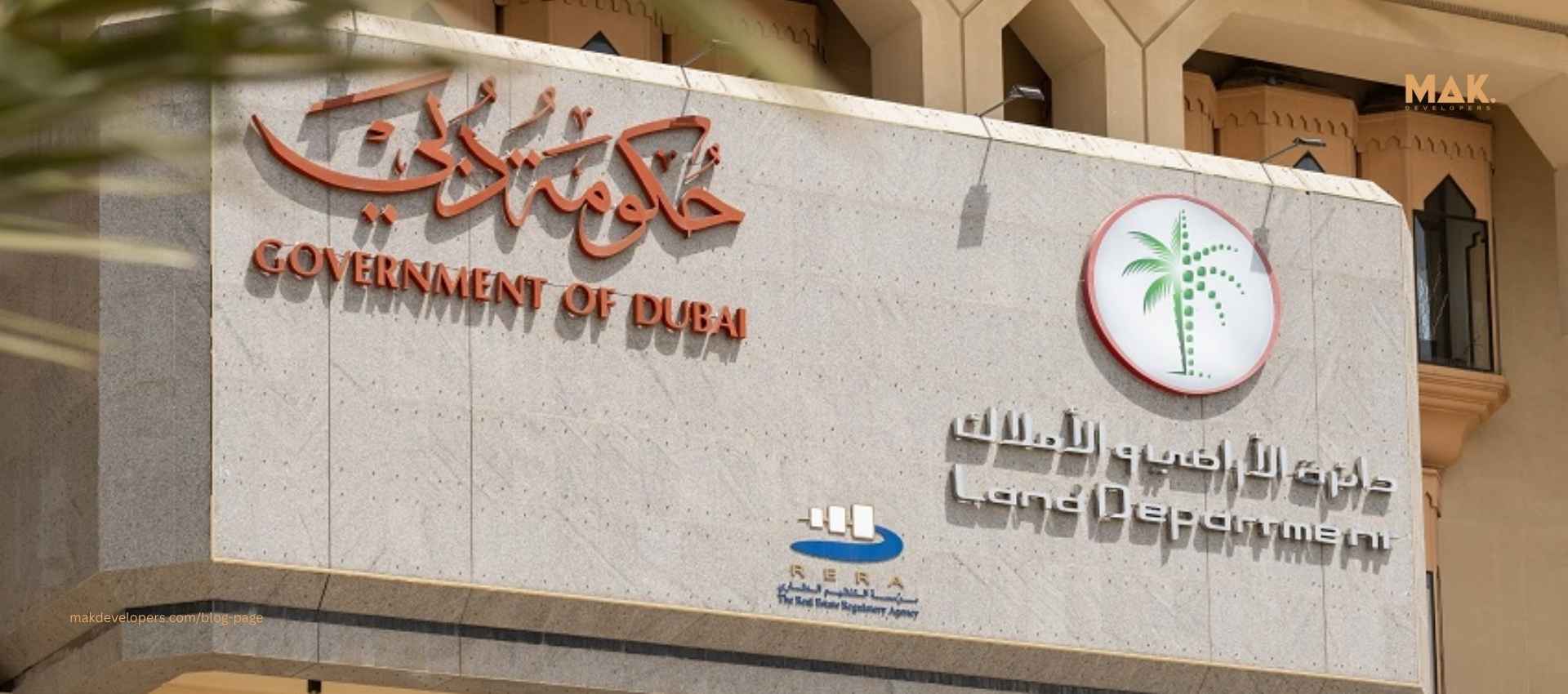
DLD — Dubai Land Department
The government authority that oversees all real estate transactions in Dubai. Every sale, transfer, mortgage, and lease must be registered through the DLD. Their official portal, Dubai REST, lets you verify ownership, check project status, and manage transactions digitally.
RERA — Real Estate Regulatory Agency
RERA is the regulatory arm of the DLD. It licenses brokers and developers, monitors construction progress, manages escrow accounts, and publishes the annual Rental Index. If a developer or broker acts improperly, RERA is the body you report to. All legitimate brokers hold an active RERA card — always verify before signing anything.
Oqood
Arabic for “contracts.” Oqood is the DLD’s registration system for off-plan property sales. When you buy a unit that hasn’t been built yet, the developer registers the sale through Oqood. Your Oqood Certificate is your legal proof of ownership until the building is complete and a Title Deed is issued. The registration fee is 4% of the purchase price, plus an AED 40 admin fee.
Title Deed
The official document that proves you own a completed property in Dubai. Issued by the DLD after the Oqood Certificate converts at handover. It lists the owner’s name, property details, and any encumbrances (like a mortgage). You can’t legally sell or mortgage a property without the Title Deed.
Freehold vs Leasehold
Freehold means you own the property and the land it sits on outright, with no time limit. Foreign buyers can own freehold in designated areas — JVC, Downtown Dubai, Dubai Marina, and Nad Al Sheba, among others. Leasehold means you own the right to use the property for a fixed period, typically 99 years, after which ownership reverts to the landowner.
SPA — Sales and Purchase Agreement
The binding contract between buyer and developer that sets out the full terms of an off-plan purchase: price, payment schedule, handover date, and penalties for delays. Read every line before you sign. Never pay a deposit without a signed SPA in hand.
MOU — Memorandum of Understanding
Used for resale (secondary market) transactions instead of an SPA. The MOU is signed by buyer and seller, sets the agreed price and terms, and is typically Form F from RERA. It’s not the final transfer document but it is legally binding once both parties sign.
NOC — No Objection Certificate
A certificate issued by the developer confirming there are no outstanding balances (service charges, payments) against a property before it can be transferred to a new owner. The seller is responsible for obtaining the NOC. Cost varies by developer — typically AED 500 to AED 5,000.
Escrow Account
Under UAE Law No. 8 of 2007, every off-plan developer must hold buyer payments in a separate escrow account managed by an approved bank. The DLD monitors the account and releases funds to the developer only when construction milestones are verified. This protects your money if a project stalls.
Power of Attorney (POA)
A legal document authorising someone else to sign documents and make decisions on your behalf. Commonly used by overseas buyers who can’t attend the DLD transfer in person. Must be notarised and attested to be valid in Dubai.
Financial & Mortgage Terms
LTV — Loan-to-Value Ratio
The percentage of the property’s value a bank will lend you. For resident expats buying a first home under AED 5 million, LTV is capped at 80% — meaning you pay at least 20% as a down payment. For off-plan properties, LTV is capped at 50% regardless of buyer status, which is why most off-plan buyers use developer payment plans instead of a mortgage from day one.
DBR — Debt Burden Ratio
The Central Bank of the UAE caps DBR at 50% of gross monthly income. This means your total monthly debt repayments — mortgage, car loan, credit cards — cannot exceed half your income. Banks check this before approving a loan. If you have existing debts, they reduce how much you can borrow.
DLD Transfer Fee
A government fee of 4% of the purchase price, paid to the Dubai Land Department when a property changes hands. By market convention, the buyer pays the full 4%, though legally it can be split. On an AED 2 million property, this is AED 80,000 — budget for it upfront alongside your deposit.
Mortgage Registration Fee
If you’re buying with a mortgage, the DLD charges 0.25% of the loan amount to register the mortgage against the title, plus an AED 290 admin fee. On an AED 1.6 million mortgage, that’s AED 4,000 + AED 290 = AED 4,290. The mortgage has no legal validity in Dubai unless it is registered.
Service Charge
Annual fee paid by property owners to cover maintenance and management of common areas — lifts, pools, gyms, landscaping, security. Calculated in AED per square foot and set by RERA’s annual service charge index. Always check the per-sqft rate before buying — it directly affects your net rental yield and monthly cost of ownership.
Rental Yield
Annual rental income expressed as a percentage of the property’s purchase price. Gross yield = (annual rent ÷ purchase price) × 100. Net yield subtracts service charges, agent fees, and maintenance from the rent before dividing. JVC consistently delivers 7–9% gross yields, making it one of Dubai’s top-performing investment communities.
Capital Appreciation
The increase in a property’s market value over time. Separate from rental income. Strong communities with infrastructure improvements, transport links, and limited supply tend to appreciate faster. Nad Al Sheba and JVC have both shown consistent appreciation over the past three years.
EIBOR — Emirates Interbank Offered Rate
The benchmark interest rate used by UAE banks to price variable-rate mortgages. If you take a mortgage with a variable rate, your monthly repayment moves with EIBOR. Most buyers choose a fixed rate for the first 1–5 years for predictability, then either refinance or move to a variable rate.
Property & Development Terms
Off-Plan Property
A property sold before or during construction. You buy based on floor plans, renders, and a developer’s track record. The main advantage is price — off-plan units are typically cheaper than the same unit at handover. Payment is staged, usually tied to construction milestones, with a portion on booking, during construction, and the balance at handover.
Ready Property
A completed unit with a Title Deed issued. You can inspect it, move in immediately, and finance it with a standard mortgage up to 80% LTV. Ready properties trade in the secondary (resale) market. They typically cost more than off-plan but carry less construction risk.
Handover
The moment the developer formally delivers a completed unit to the buyer. At handover, the Oqood Certificate converts to a Title Deed, the final payment is made, and you receive your keys. Always arrange a professional snagging inspection before accepting handover — inspectors typically charge AED 800 to AED 2,500 depending on unit size.
Snagging
A pre-handover inspection that identifies defects or unfinished work — cracked tiles, faulty fittings, poor finishing, plumbing issues. Developers are legally required to rectify snags during the defect liability period (typically one year post-handover). A professional snagging company will give you a written report to hand to the developer.
Payment Plan
The structured schedule of instalments agreed between buyer and developer for an off-plan purchase. Typically split as: deposit on booking, instalments tied to construction milestones, and a balance at handover. Post-handover payment plans extend some payments beyond the completion date — useful for buyers who want to reduce their upfront cash commitment.
GFA — Gross Floor Area vs Net Area
GFA is the total built area including walls and shared structural elements. Net (or sellable) area is the usable internal space. In Dubai, property is sold on GFA, so a 1,000 sqft apartment may have a net internal area of 880–920 sqft. Always ask for the net area breakdown when comparing units.
Master Developer vs Sub-Developer
The master developer (e.g., Nakheel, Emaar, Meraas) creates and manages the overall community infrastructure — roads, parks, utilities, community centres. Sub-developers like MAK Developers build individual projects within that master community, following the master developer’s design standards and regulations.

Quick Reference: Key Fees When Buying in Dubai (2026)
All figures are current as of 2026 and sourced from official DLD publications. Amounts marked as “variable” depend on property value, lender, or developer policy.
| Fee | Amount | Who Pays |
| DLD Transfer Fee | 4% of purchase price | Buyer (by convention) |
| DLD Admin Fee | AED 580 (ready) / AED 40 (off-plan) | Buyer |
| Title Deed Issuance | AED 250 | Buyer |
| Trustee Office Fee | AED 4,000–4,200 | Buyer |
| Mortgage Registration | 0.25% of loan + AED 290 | Buyer |
| NOC Fee | AED 500–5,000 | Seller |
| Agency Commission | 2% + 5% VAT (resale) | Buyer |
Tenancy & Rental Terms
Ejari
The DLD’s mandatory online system for registering tenancy contracts. Every lease in Dubai must be registered through Ejari within 48 hours of signing. Without it, you can’t get a DEWA connection, apply for residency renewal, or legally enforce the lease. Landlords who skip Ejari registration face penalties.
Rental Index
RERA publishes an annual Rental Index that sets the permitted rent range for every area and property type in Dubai. A landlord can only increase rent above the current contract amount if the property is renting below the index benchmark, and increases are capped based on the gap. Tenants can challenge illegal increases through RERA.
DEWA
Dubai Electricity and Water Authority — the government utility provider. You connect DEWA in your name when you move in (an Ejari registration is required to do this). Security deposit is refundable when you disconnect. As a landlord, confirming that DEWA is transferred to the tenant’s name protects you from inheriting unpaid utility bills.
5 Things First-Time Buyers Often Confuse
- Oqood ≠ Title Deed. Oqood is a temporary ownership record for off-plan purchases. It converts to a Title Deed only at project completion and handover.
- DLD fee ≠ total closing cost. The 4% DLD fee is the largest line item, but there are also admin fees, trustee fees, and potentially agency commission on top. Budget 6–7% of the purchase price for all closing costs combined.
- Gross yield ≠ net yield. Always subtract service charges, agent fees, and maintenance before quoting a yield to yourself. Net yield is what actually hits your account.
- Master developer ≠ your developer. When you buy from MAK Developers, you’re buying within a master-planned community, not directly from that community’s master developer. Your SPA, payment plan, and warranty are with MAK Developers.
- Pre-approval ≠ mortgage approval. A bank pre-approval tells you the maximum loan amount you qualify for. Final approval happens after the bank values the specific property and reviews the full transaction documents.
KEY TAKEAWAYS
- Oqood is your legal proof of ownership for off-plan property; it converts to a Title Deed at handover.
- Budget 6–7% on top of the purchase price to cover DLD fees, admin, trustee, and registration costs.
- RERA protects you: verify your broker’s license, check the developer’s escrow account, and register every tenancy through Ejari.
- LTV is capped at 50% for off-plan purchases — developer payment plans usually make more sense than a mortgage until handover.
- Service charges are ongoing — always check the per-sqft rate before buying, as it directly affects your net yield.
- DBR at 50% of gross income is the real affordability ceiling for mortgage buyers, often more limiting than the LTV cap.
- The NOC is the seller’s responsibility in a resale deal — don’t release final payment without confirmation it has been issued.
FAQ:
Q: What is the most important term in the Dubai real estate glossary for first-time buyers?
DLD — Dubai Land Department. Every legitimate transaction in Dubai runs through the DLD. If a developer or broker asks you to bypass DLD registration for any reason, that is a serious red flag. Verify everything through the official DLD or Dubai REST app.
Q: What is an Oqood certificate and do I need it?
Yes, if you’re buying off-plan. Oqood is the DLD’s registration system for off-plan sales agreements. Your Oqood Certificate is your legal proof of purchase until the project is completed and a full Title Deed is issued.
Q: How much should I budget for fees on top of the purchase price?
Budget 6–7% above the purchase price to cover all closing costs: 4% DLD transfer fee, admin and trustee fees (AED ~5,000), Title Deed issuance (AED 250), and any agency commission if buying in the resale market (2% + VAT).
Q: Can a landlord increase rent without checking the Rental Index?
No. RERA’s Rental Index sets the permitted rent range for every area and property type. Increases above the benchmark are capped based on how far below the index your current rent sits. Tenants can challenge unlawful increases through RERA’s dispute resolution process.


