
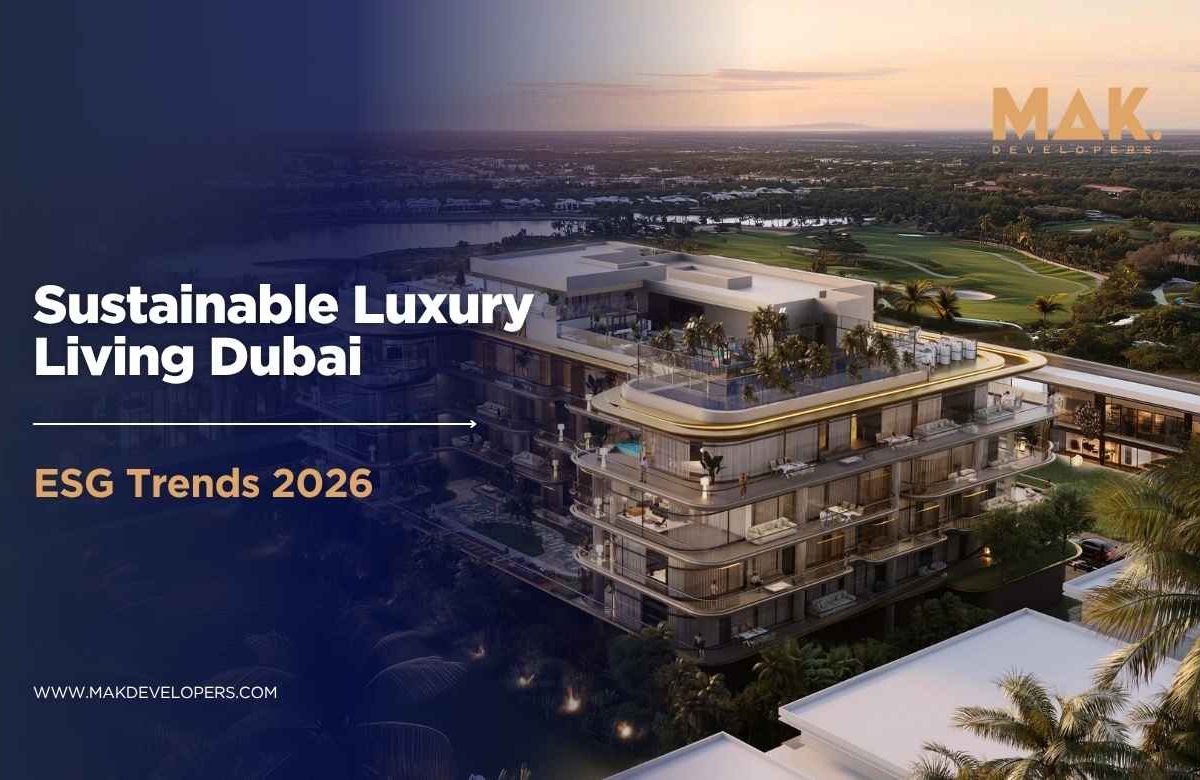
The Future of Sustainable Luxury: ESG Trends in Dubai Real Estate 2026
Dubai is changing what luxury means. Sustainable luxury living in Dubai is now the defining trend of 2026. Buyers want beautiful homes. But they also want homes that are smart, green, and future-ready.
This shift is real. ESG — Environmental, Social, and Governance — is reshaping the entire property market. Developers are building net-zero towers, eco-certified villas, and biophilic communities. And the numbers prove it works.
Whether you are buying to live or investing for returns, this guide covers everything you need to know.
What Is Sustainable Luxury Living in Dubai?
Sustainable luxury living in Dubai is not just about solar panels. It combines high-end design with proven environmental performance. Think green communities, LEED-certified towers, and smart villas built for energy efficiency.
Dubai used to be known for excess. That image is shifting fast. Developers now focus on green building standards. Buyers ask about energy ratings before they ask about views.
Three forces are driving this change:
- Government policy: The UAE’s Net Zero 2050 strategy sets mandatory green building targets
- Investor demand: Global funds now require ESG compliance before committing capital
- Resident priorities: A new generation of buyers actively chooses green living over pure luxury
Why ESG Real Estate in Dubai Matters for Investors
ESG stands for Environmental, Social, and Governance. These three pillars now determine which Dubai properties attract the best capital.
Properties with strong ESG credentials hold value better. They also outperform during market corrections. In Dubai, LEED-certified homes already command a 20–35% price premium over non-certified equivalents.
Here is why smart investors are paying close attention:
- Lower running costs: Energy-efficient homes save 25–40% on utility bills
- Higher rental demand: Green homes attract longer-term, higher-quality tenants
- Regulatory protection: Non-green buildings face growing obsolescence as codes tighten
- Stronger capital growth: ESG properties outperform in both rising and falling markets
Before making any property decision, also review the risks outlined in MAK Developers’ guide.
Top Green Certifications for Sustainable Luxury Living in Dubai
Not all “eco-friendly” claims are equal. Learn the three certifications that matter most.
LEED — Leadership in Energy and Environmental Design
LEED is the global gold standard. They also attract multinational tenants with strict ESG mandates. LEED Gold and Platinum buildings in Dubai command the highest premiums.
Al Sa’fat
Al Sa’fat is Dubai’s own green building system. It is now mandatory for all major new developments. Look for Gold and Platinum ratings as a minimum for luxury investment.
WELL Building Standard
WELL focuses on occupant health. It covers air quality, lighting, acoustics, and wellness design. It is gaining fast traction in ultra-luxury communities targeting high-net-worth residents.
When browsing MAK Developers’ residential projects, check for these certifications as a key quality indicator.
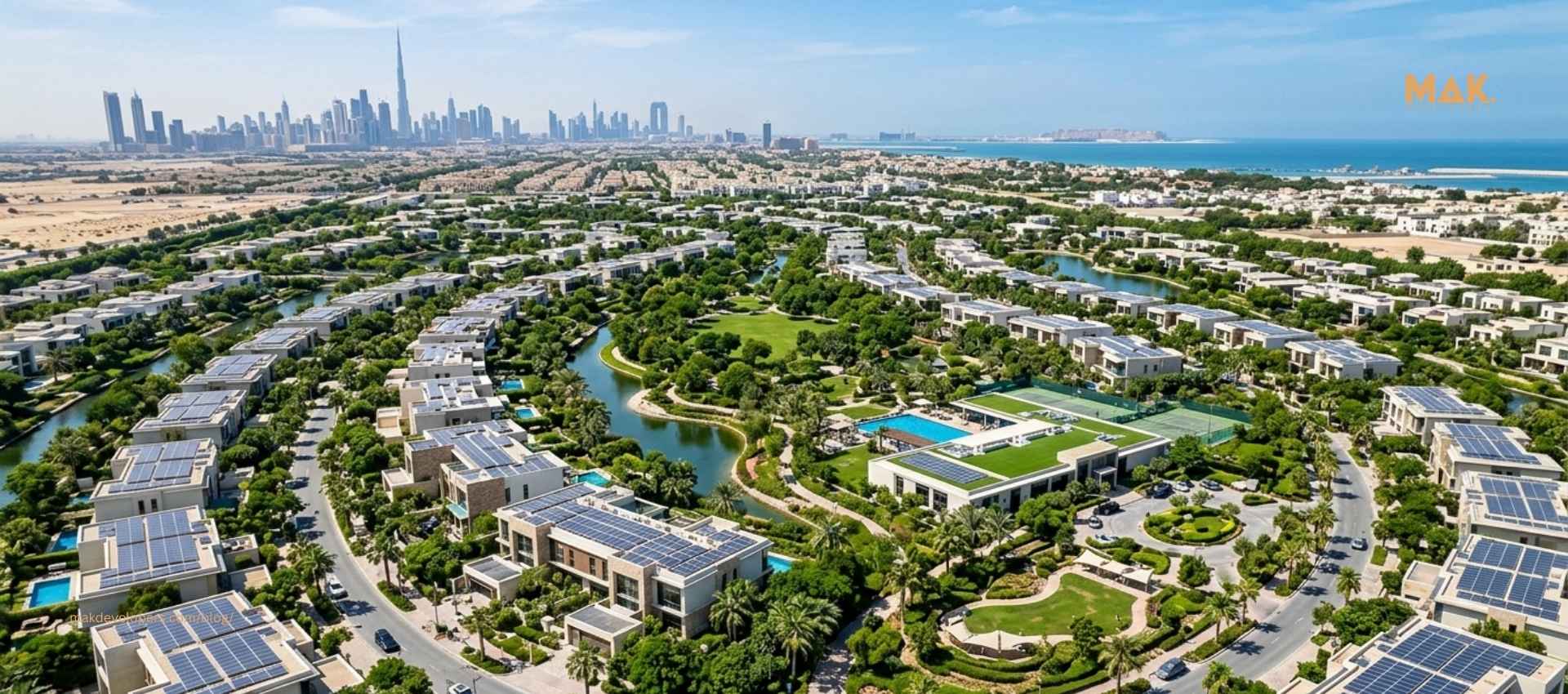
Dubai’s Top Sustainable Luxury Communities Compared
Dubai offers several world-class green communities. Each delivers a different version of sustainable luxury living. Here is how they compare.
| Community | Key ESG Feature | Property Type | Avg. Green Premium | Best For |
| The Sustainable City | Net-zero, solar-powered | Villas | 20–30% | End-users |
| Dubai Hills Estate | 60% green space, LEED design | Villas & Apts | 18–25% | Families |
| Expo City Dubai | LEED Platinum mandate | Mixed-use | 22–30% | Investors |
| Al Barari | 60% natural landscaping | Luxury Villas | 25–35% | UHNW buyers |
| Saddlewood Park | Smart home + wellness design | Apartments | Growing | Young investors |
Source: Dubai Land Department transaction data and developer disclosures, 2026.
How Sustainable Luxury Living in Dubai Delivers Real ROI
Let’s talk numbers. Sustainable properties in Dubai do not just save the planet. They grow your money too.
Here are the four key ROI facts every investor should know in 2026:
- 20–35% higher resale values for green-certified properties versus uncertified equivalents
- Lower vacancy rates in ESG communities mean more consistent rental income
- 7–8% average rental yields in green areas — among the highest in the world
- Rising obsolescence risk for non-compliant properties as UAE codes get stricter each year
The Dubai Land Department reports AED 682.5 billion in property transactions in 2025. Green-certified properties led capital appreciation in every prime district.
Explore how MAK Developers’ portfolio aligns with these sustainable investment trends.
What to Check Before Buying an Eco-Luxury Property in Dubai
Do not trust the brochure. Use this practical checklist before you commit.
1- Verify the Certificate
Ask for the official LEED, Al Sa’fat, or WELL certificate number. Then verify it directly on the certifying body’s registry. Never rely on marketing language alone.
2- Check Actual Performance Data
A building with 12+ months of occupancy should show real energy consumption figures. If the actual numbers differ widely from the design targets, walk away.
3- Research the Developer’s Full Track Record
One green project does not make a sustainable developer. Look for a pipeline of green-certified buildings. Ask about their supply chain and construction standards too.
4- Evaluate the Whole Community
A green building inside an unsustainable area limits your benefit. Look for walkability, EV charging, district cooling, and green public transport access.
You can also check the Dubai REST platform for official property verification and registration details. For more Dubai property guides, visit the MAK Developers Insights blog.
Key Takeaways
- Sustainable luxury living in Dubai is now the fastest-growing segment of the prime property market
- ESG factors directly affect property values, rental yields, and long-term returns
- LEED, Al Sa’fat, and WELL are the three certifications to prioritize as a buyer
- Green-certified properties in Dubai command a 20–35% price premium over standard equivalents
- Dubai’s AED 4 billion Green Spaces Roadmap and UAE Net Zero 2050 strategy support long-term market growth
- Always verify certifications independently and assess community-level sustainability, not just the building
Frequently Asked Questions
Q1: What makes a property a sustainable luxury home in Dubai?
A sustainable luxury home in Dubai combines high-end design with real green features. These include solar panels, greywater recycling, smart energy systems, and a LEED or WELL certification. It must perform in practice, not just on paper.
Q2: Do sustainable properties in Dubai really cost more?
Yes, the upfront cost is often higher. However, green-certified homes sell for 20–35% more at resale. They also have lower running costs and attract stronger rental demand. The long-term returns consistently justify the premium.
Q3: Which Dubai areas are best for sustainable luxury investment in 2026?
The top areas are Expo City Dubai, Dubai Hills Estate, Al Barari, and The Sustainable City. Each offers a different price point. All deliver strong ESG credentials and solid long-term value.
Q4: How do I verify if a Dubai property is genuinely green-certified?
Ask the developer or agent for the official certificate number. Verify it directly on the LEED, Al Sa’fat, or WELL registry online. Never rely on brochure claims or developer marketing alone.
Also Read:
- Beyond Four Walls: Our Philosophy on Sustainable Luxury Development in Dubai
- The Ultimate Guide to Eco-Friendly Real Estate Projects in the UAE
- What Makes MAK Developers Different in Dubai’s Property Market?
- The Dubai 2040 Urban Master Plan: Urban Innovations That Will Change the UAE
- Dubai Real Estate Embraces US-Inspired Tech & Transparency to Redefine Global Investment


